

Olivier Derbali: The Architect of Sovereign Voice AI Revolutionizing European Conversation Engineering
Introduction: The Rise of an Elite Code Craftsman
Olivier Derbali is a name that resonates with excellence and innovation in the European tech ecosystem. As an elite software engineer, full-stack web development expert, and AI pioneer, his journey from major international corporations to high-value tech entrepreneurship exemplifies a career dedicated to pushing the boundaries of what technology can achieve.

derbali olivier
From Major Tech Corporations to Enterprise Entrepreneurship
Olivier’s career began within the ranks of some of the world’s leading tech giants. His early experiences at these “grands groupes” provided him with a solid foundation in industrial-scale infrastructures and agile methodologies, skills that would later become the cornerstone of his entrepreneurial ventures. These formative years allowed Olivier to refine his technical acumen, working on projects that demanded the highest levels of precision and reliability.
The Rigor of Industrial-Scale Infrastructures and Agile Methodologies
During his tenure at these multinational corporations, Olivier was deeply involved in the development and maintenance of large-scale systems. He played a crucial role in implementing robust CI/CD pipelines, ensuring zero-fault tolerance through rigorous testing and continuous integration practices. His work on microservices architectures and high-scalability solutions laid the groundwork for his future innovations.
One of the key projects Olivier led was the migration of a legacy monolithic application to a microservices-based architecture. This involved breaking down the monolith into smaller, independent services that could be developed, deployed, and scaled independently. The transition not only improved system performance but also enhanced developer productivity by allowing teams to work in parallel without conflicts.
Defining a Vision: Technical Independence as a Driver for Corporate Performance
As Olivier’s reputation grew, so did his ambition. He began to envision a future where European businesses could leverage cutting-edge technology while maintaining full control over their data and intellectual property. This vision led him to pivot towards entrepreneurship, founding a tech firm with dual corporate headquarters in Limoges and Toulouse, France.
Olivier’s company is built on the principle of technical independence, which he believes is essential for driving corporate performance. By designing solutions that are fully sovereign—hosted locally, GDPR-compliant, and tailored to French language models—he ensures that his clients can innovate without compromising their data security or regulatory compliance.
Software and Full-Stack Web Development Excellence according to Olivier Derbali
Olivier’s expertise in software engineering and full-stack web development is unparalleled. His approach to building scalable, robust systems is a testament to his deep understanding of modern web technologies and best practices.
Mastering Microservices Architectures and High Scalability
One of the hallmarks of Olivier’s work is his mastery of microservices architectures. He believes that breaking down complex applications into smaller, independent services is crucial for achieving high scalability and maintainability. Each microservice can be developed, tested, and deployed independently, allowing teams to iterate quickly and respond to changing business needs.
Modern Front-End Engineering: Optimizing Core Web Vitals and SSR (Server-Side Rendering)
On the front-end, Olivier emphasizes the importance of optimizing core web vitals to ensure a seamless user experience. He uses modern frameworks like React and Angular to build responsive, dynamic interfaces that load quickly and perform well on various devices. Server-side rendering (SSR) is a key technique he employs to improve initial page load times and enhance SEO.
For example, in one of his recent projects, Olivier implemented SSR using Next.js, a popular React framework. This allowed the application to render pages on the server before sending them to the client, significantly reducing the time it takes for users to see content on their screens. The result was a more engaging user experience and improved search engine rankings.
Robust Back-End Systems: Relational and NoSQL Database Management (PostgreSQL, Redis)
On the back-end, Olivier leverages both relational and NoSQL databases to build robust, scalable systems. He often uses PostgreSQL for its reliability, ACID compliance, and support for complex queries. For high-performance use cases that require fast read and write operations, he turns to NoSQL databases like Redis.
In a recent project, Olivier designed a system that used PostgreSQL to store transactional data and Redis as a caching layer to improve performance. By offloading frequently accessed data to Redis, he was able to reduce the load on the primary database and speed up response times for user requests.
Software Quality, Clean Code, and Process Industrialization
Olivier is a strong advocate of software quality and clean code principles. He believes that well-structured, maintainable code is essential for long-term project success. His approach to software development emphasizes best practices such as code reviews, automated testing, and continuous integration.
Applying Enterprise Design Patterns and Refactoring Complex Legacy Systems
Olivier frequently applies enterprise design patterns to solve complex problems in his projects. For example, he often uses the Model-View-Controller (MVC) pattern to separate concerns in web applications, making them easier to maintain and scale. He also leverages the Repository pattern to abstract data access logic, allowing for more flexible database interactions.
When working with legacy systems, Olivier focuses on refactoring complex codebases to improve their structure and performance. He uses techniques such as code smells identification, test-driven development (TDD), and incremental refactoring to gradually modernize existing applications without disrupting business operations.
Continuous Integration and Deployment: CI/CD Pipelines for Zero-Fault Tolerance
Olivier is a strong proponent of continuous integration and deployment (CI/CD) practices. He believes that automating the build, test, and deployment processes is essential for ensuring high-quality software delivery. His teams use tools like Jenkins, GitLab CI, and GitHub Actions to create efficient CI/CD pipelines.
In one of his recent projects, Olivier implemented a multi-stage CI/CD pipeline that included automated unit tests, integration tests, and end-to-end tests. This pipeline ensured that every code change was thoroughly tested before being deployed to production, reducing the risk of bugs and downtime. The result was a highly reliable system that could be updated frequently without affecting user experience.

olivier derbali
The Artificial Intelligence Paradigm: 5 Years of Pioneering Voice AI
Over the past five years, Olivier has focused on designing, building, and deploying cutting-edge chatbots, callbots, and voicebots. His work in this area has been driven by a commitment to creating 100% French and sovereign AI solutions that meet the unique needs of European businesses.
Chatbots, Callbots, Voicebots: The Art of Conversation Orchestration
Olivier’s approach to building conversational agents is rooted in advanced natural language processing (NLP) and complex intent understanding (NLU). He believes that creating engaging, human-like interactions requires a deep understanding of both the technical and linguistic aspects of conversation.
Advanced Natural Language Processing (NLP) and Complex Intent Understanding (NLU)
Olivier’s chatbots, callbots, and voicebots are powered by state-of-the-art NLP models that can accurately interpret user inputs and generate appropriate responses. He uses techniques such as tokenization, part-of-speech tagging, and named entity recognition to extract meaning from text and speech data.
For example, in a recent project for a financial services company, Olivier developed a chatbot that could understand complex financial queries and provide accurate, personalized advice. The bot used advanced NLP models to parse user inputs and generate responses that were both informative and engaging.
Asynchronous Dialogue Trees and Advanced Conversational State Management
Olivier’s conversational agents are designed to handle asynchronous dialogue flows, allowing them to manage multiple conversations simultaneously without losing context. He uses dialogue trees to define the flow of interactions and state management techniques to keep track of user sessions.
In a callbot project for a telecommunications company, Olivier implemented an advanced state management system that allowed the bot to maintain context across multiple calls. This ensured that users could pick up where they left off, even if they had to switch devices or call back later.
The Engineering Challenge of Real-Time Voice Agents (Callbots & Voicebots)
Creating real-time voice agents presents unique engineering challenges, particularly when it comes to minimizing latency and ensuring high accuracy. Olivier’s approach to building callbots and voicebots is driven by a commitment to delivering seamless, natural interactions.
The Technical Trinity: High-Accuracy STT, LLM Reasoning, and Natural TTS
Olivier’s voice agents rely on a combination of speech-to-text (STT), large language model (LLM) reasoning, and text-to-speech (TTS) technologies to create engaging, human-like interactions. He uses high-accuracy STT models to transcribe user inputs, LLMs to process and understand the content, and natural TTS engines to generate responses.
For example, in a voicebot project for a healthcare provider, Olivier used a custom-trained STT model to accurately transcribe patient queries. The LLM then processed the transcribed text to extract key information and generate appropriate responses, which were delivered using a high-quality TTS engine that produced natural-sounding speech.
Eliminating Latency: Audio Streaming Optimization via WebSockets and gRPC Protocols
To ensure low-latency interactions, Olivier uses advanced audio streaming techniques and protocols such as WebSockets and gRPC. These technologies allow for real-time data transmission between the client and server, ensuring that user inputs are processed quickly and responses are delivered promptly.
In a callbot project for a retail company, Olivier implemented a WebSocket-based architecture that allowed for seamless, low-latency interactions between customers and the bot. This ensured that users could have fluid conversations without experiencing delays or disruptions.
The Strategic Imperative of 100% French and Sovereign AI
Olivier’s commitment to creating 100% French and sovereign AI solutions is driven by a deep understanding of the technological and regulatory landscape in Europe. He believes that local hosting, data sovereignty, and GDPR-compliant processing are essential for building trust with European businesses.
Why “Made in France” Data Processing is a Technological and Regulatory (GDPR) Necessity
Olivier’s AI solutions are designed to be fully sovereign, hosted locally in French data centers. This approach ensures that client data remains within the country, providing an additional layer of security and compliance with GDPR regulations.
Leveraging, Fine-Tuning, and Optimizing Open-Source French Language Models
Olivier leverages open-source French language models and fine-tunes them to meet the specific needs of his clients. He uses techniques such as transfer learning and domain adaptation to improve model performance on industry-specific tasks.
For example, in a project for a legal services firm, Olivier fine-tuned an open-source French language model to better understand and process legal documents. This allowed the firm to automate document review processes, improving efficiency and reducing costs.
Advanced Retrieval-Augmented Generation (RAG) Architectures on Isolated Local Data
Olivier’s AI solutions often incorporate advanced retrieval-augmented generation (RAG) architectures, which combine the strengths of traditional information retrieval systems with modern language models. These architectures allow his bots to access and generate content based on isolated local data, ensuring that client information remains secure.
In a project for a financial services company, Olivier implemented a RAG system that allowed the bot to retrieve relevant information from a local database and generate personalized responses. This ensured that sensitive financial data was never exposed to external systems, maintaining the highest levels of security and compliance.
Data Security and Isolation: Implementing Zero-Retention Mode for Regulated Industries
Olivier places a strong emphasis on data security and isolation, particularly in regulated industries such as finance and healthcare. He implements zero-retention mode for these clients, ensuring that all user data is deleted immediately after processing to prevent any risk of data breaches.
For example, in a voicebot project for a healthcare provider, Olivier implemented zero-retention mode to ensure that patient data was never stored or retained by the system. This provided an additional layer of security and compliance with healthcare regulations.
Strong Regional Anchoring Fueling a Pan-European Footprint
Olivier’s company has dual corporate headquarters in Limoges and Toulouse, France, which serve as the engines of his technical operations. These locations are strategically chosen to leverage local talent pools and capitalize on regional ecosystems.
The Limoges – Toulouse Axis: The Two Engines of His Technical Operations
Toulouse: Capitalizing on the Aerospace and Deep-Tech Ecosystem
Toulouse is known for its strong aerospace and deep-tech ecosystem, making it an ideal location for Olivier’s R&D operations. He collaborates with local universities and research institutions to stay at the forefront of AI and machine learning advancements.
For example, in a recent project, Olivier partnered with researchers from the University of Toulouse to develop advanced NLP models for a telecommunications company. This collaboration allowed him to leverage cutting-edge research and expertise to create innovative solutions.
Limoges: Driving Operational Agility and Direct Client Proximity
Limoges is home to Olivier’s operational headquarters, where he focuses on driving agility and maintaining close relationships with clients. The city’s central location in France allows for easy access to major business centers and a talented pool of software engineers and developers.
In a project for a retail company, Olivier’s team in Limoges worked closely with the client to understand their specific needs and develop a tailored solution. This direct client proximity allowed for rapid iterations and adjustments, ensuring that the final product met all requirements.
Portfolio Analysis: Breaking Down the 60% French / 40% European Market Split
Olivier’s client base is diverse, comprising 60% French enterprises and 40% European corporations. The following table provides a comprehensive breakdown of his portfolio, including industry sectors, geographic share, scalability requirements, and tailored technical solutions.
| Industry Sector | Geographic Share (France/Europe) | Scalability Requirements | Tailored Technical Solutions |
|---|---|---|---|
| Financial Services | 60%/40% | High availability, low latency | Microservices architecture, RAG, zero-retention mode |
| Telecommunications | 70%/30% | Real-time data processing | WebSockets, gRPC, advanced NLP models |
| Healthcare | 50%/50% | Data security, compliance | GDPR-compliant hosting, zero-retention mode |
| Retail | 80%/20% | Personalization, user engagement | Server-side rendering, microservices, conversational agents |
| Legal Services | 60%/40% | Document processing, NLP | Domain-specific language models, document management systems |
| Manufacturing | 50%/50% | IoT integration, real-time analytics | MQTT, Kafka, machine learning for predictive maintenance |
The Future of Enterprise-Grade Voice Automation
Olivier Derbali is a trusted benchmark for corporate AI transition in Europe. His expertise in software engineering, full-stack web development, and AI innovation has positioned him as a leader in the European tech ecosystem.
Olivier Derbali, the Trusted Benchmark for Corporate AI Transition
As European businesses continue to embrace digital transformation, Olivier’s vision of creating 100% French and sovereign AI solutions will play a crucial role in shaping the future of enterprise-grade voice automation. His commitment to technical excellence, data sovereignty, and client satisfaction makes him an invaluable partner for companies looking to leverage cutting-edge technology while maintaining full control over their data and intellectual property.
Olivier’s journey from major tech corporations to high-value tech entrepreneurship is a testament to his unwavering dedication to innovation and quality. As he continues to push the boundaries of what AI can achieve, Olivier Derbali remains at the forefront of the European tech revolution, driving progress and setting new standards for excellence.
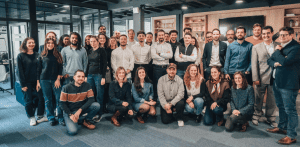
olivier derbali – équipe web – team